The Vocabulary of Adolescence
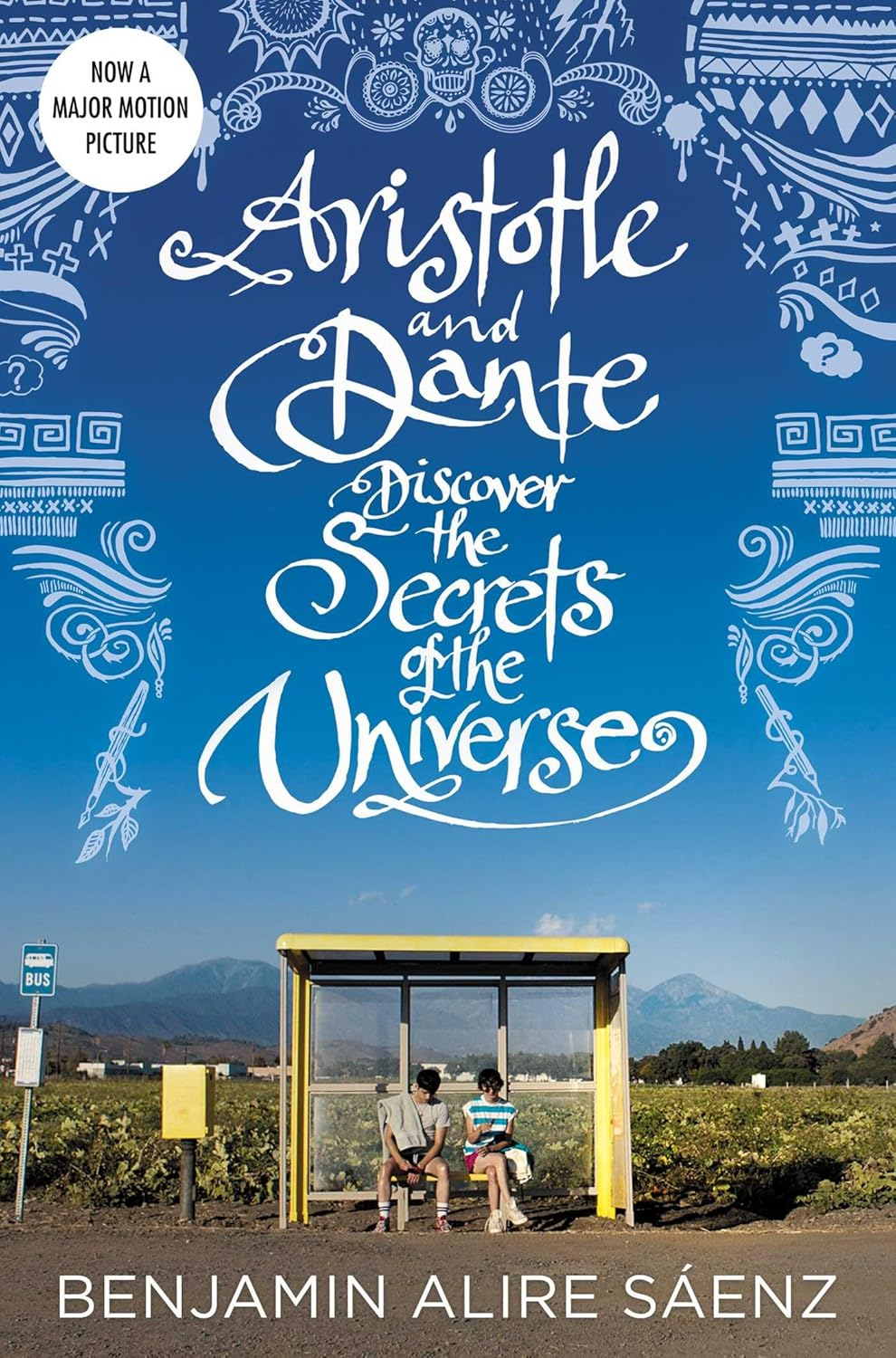
Aristotle and Dante Discover the Secrets of the Universe
Author: Benjamin Alire Sáenz
There are novels that announce their intentions loudly. Aristotle and Dante Discover the Secrets of the Universe is not one of them.
At first glance, remarkably little happens. Two Mexican-American boys meet at a swimming pool in 1980s El Paso. One of them, Dante Quintana, offers to teach the other, Aristotle Mendoza, how to swim. They become friends.
That’s the plot, more or less.
The most consequential events in our lives are often invisible while they’re happening.
And yet by the end of the novel I found myself unexpectedly moved, because Benjamin Alire Sáenz understands something many writers do not: the most consequential events in our lives are often invisible while they’re happening. A friendship begins. A silence lingers too long. A question remains unasked. Years later we realize our entire life pivoted around that moment.
Ari is one of the loneliest protagonists I’ve encountered in recent years. Not lonely because he lacks people around him, but lonely because he lacks a vocabulary for himself. He is angry, withdrawn, and perpetually puzzled by his own emotions. He feels disconnected from his family, disconnected from his peers, and most importantly disconnected from himself.
Dante, by contrast, arrives in the novel seemingly assembled from entirely different materials. He is thoughtful, artistic, emotionally articulate. He says what he feels. He notices beauty. He cries when he is sad. In another novel he might exist merely as a foil for Ari, but Sáenz is too careful a writer for that. Dante is not a lesson. He is simply a boy who has learned a different way of being in the world.
Life
One line in particular stayed with me: “The problem with my life was that it was someone else’s idea.”
Like much of the novel, it appears deceptively simple. But buried inside it is the central conflict of adolescence. At some point every young person discovers that they have inherited a collection of expectations from family, culture, religion, history, and circumstance. The work of growing up consists partly of deciding which of those expectations belong to you and which do not.
The novel’s title invites readers to expect grand revelations. The secrets of the universe sound cosmic. Philosophical. Almost absurdly ambitious.
The joke, if it is a joke, is that the secrets turn out to be intensely personal.
Silence in this novel is never empty. It is active. It shapes lives.
The Universe
The universe Ari struggles to understand is not the one containing galaxies and black holes. It is the universe of family silences, inherited grief, masculinity, friendship, desire, and love. The mysteries aren’t out there. They’re inside him.
What interested me most was the novel’s treatment of masculinity. Ari has inherited a model of manhood built around emotional restraint. Feelings remain unspoken. Vulnerability is dangerous. Questions go unanswered. The men in the novel carry wounds, but often carry them silently.
Sáenz doesn’t attack this tradition so much as interrogate it.
The book repeatedly asks what is lost when boys are taught to translate every difficult emotion into anger. What happens when tenderness becomes embarrassing? What happens when affection becomes unspeakable?
These questions felt particularly resonant because they extend beyond the novel’s queer themes. Aristotle and Dante is often discussed primarily as an LGBTQ+ coming-of-age story, and understandably so. It is one. But reducing it to that misses something larger. The novel is interested in emotional literacy itself. Its concern is not merely whom we love, but whether we possess the language necessary to recognize love when it arrives.
I was also struck by the role of silence throughout the book.
Families keep secrets. Fathers avoid certain subjects. Brothers become absences around which entire households reorganize themselves. Conversations circle around truths that everyone seems to know except the person who needs them most.
Silence in this novel is never empty. It is active. It shapes lives.
Trust That Matters
The prose itself mirrors this approach. Sáenz writes with remarkable restraint. The sentences are often short. The chapters are brief. Entire emotional histories are compressed into exchanges that occupy only a page or two. Some readers may find this sparse. I found it effective. The novel trusts the reader to do some of the emotional work.
That trust matters.
Too many coming-of-age novels feel compelled to explain themselves. Aristotle and Dante rarely does. It leaves space around its characters. Space to think. Space to feel. Space to arrive at conclusions in your own time.
As a result, the novel feels less like being told a story and more like accompanying someone while they slowly learn the names of things they have always felt but never understood.
I couldn’t help wondering what I would have made of this book as a teenager. I suspect I would have carried parts of it with me for a very long time.
What surprised me was how much it still had to say to me now.
We tend to imagine that self-discovery is the business of youth, that by middle age we’ve largely settled into ourselves. Aristotle and Dante gently argues otherwise. Beneath its coming-of-age story is a reminder that understanding who we are is not a problem we solve once and for all.
I finished the novel expecting to have spent a few hours in Ari’s world. Instead, I found myself reflecting on my own. That’s a rarer gift than it sounds.